What Does It Mean to Be a Company of Good?
Lessons from Zac Toh’s entrepreneurial journey
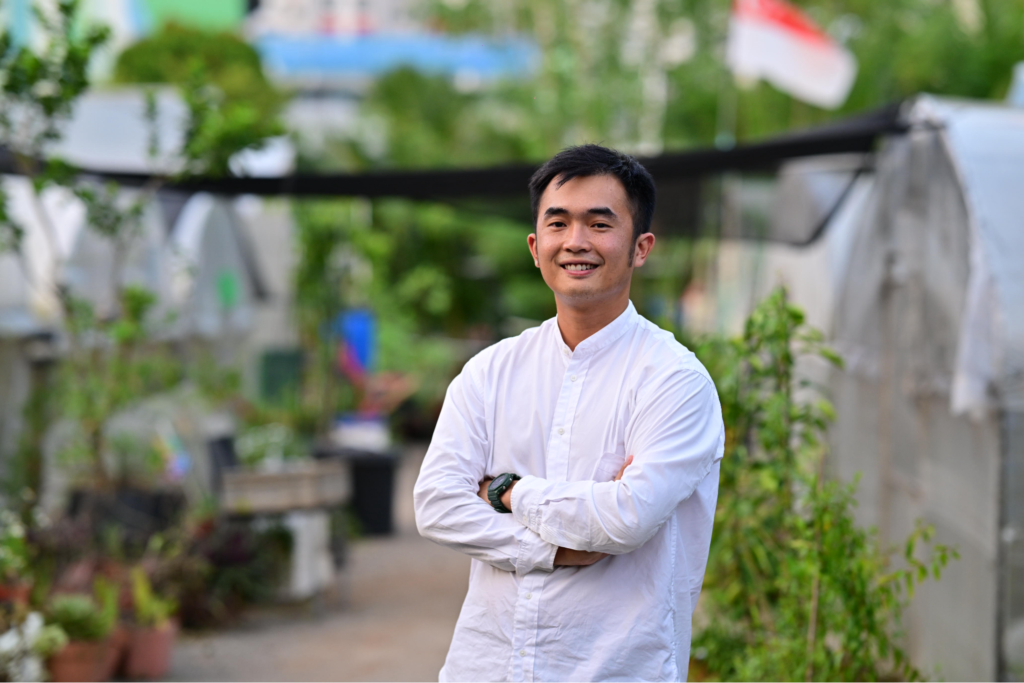 Image courtesy of: City Sprouts
What does it really mean for a business to be “good”?
Is it about giving back to the community, building sustainable products, taking care of employees – or something deeper?
This was one of the questions explored by Zac Toh during a recent Company of Good session by the National Volunteer and Philanthropy Centre (NVPC).
Through its Company of Good Recognition System, NVPC recognises organisations in Singapore for their commitment to Corporate Purpose across five areas: People, Society, Governance, Environment and Economic.
For Zac, however, being a company of good is not simply about meeting a set of criteria. It is about continuously asking how a business can create value and improve, especially when times get tough.
His perspective comes from years of building businesses across urban farming, sustainability and innovation – and learning first-hand what it takes to turn an idea into something that works in the real world.
From community farming to building with purpose
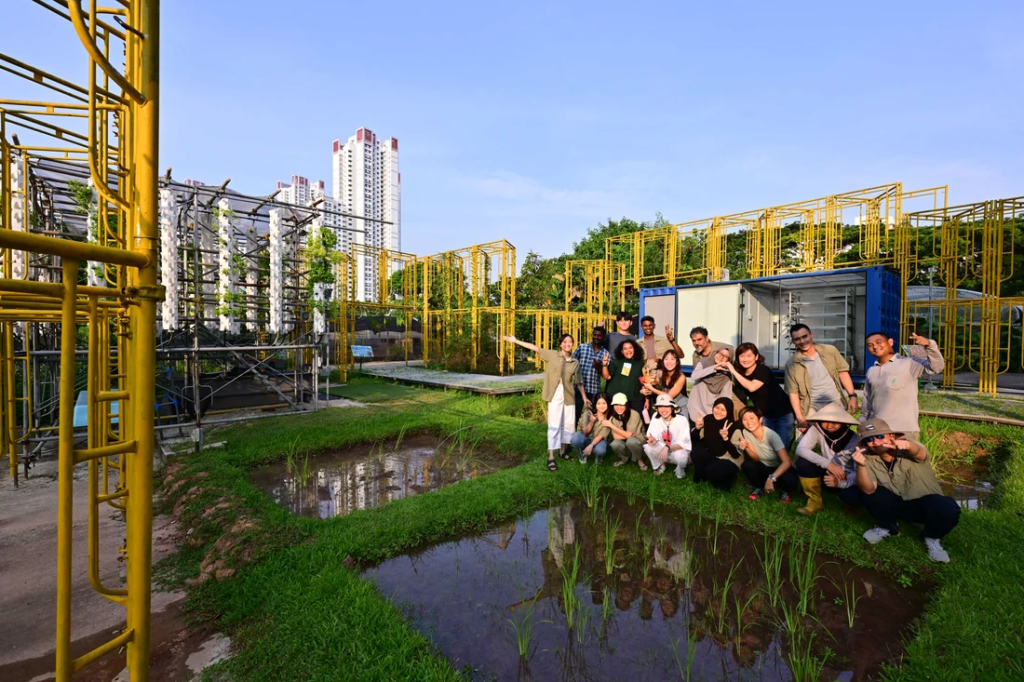 Image courtesy of: City Sprouts
Zac’s entrepreneurial journey began with City Sprouts, a community urban farming initiative started during COVID-19.
The initiative transformed underused spaces across Singapore into places for urban farming, learning and community programmes. But for Zac, the work was about more than growing food.
“We are very interested in how we can make our social compact tighter and stronger,” he shared.
As the initiative grew, Zac began working more closely with startups developing solutions to wider environmental and social challenges.
His experiences at COP27 and COP28 further reinforced the scale of the problems facing fragmented communities around the world.
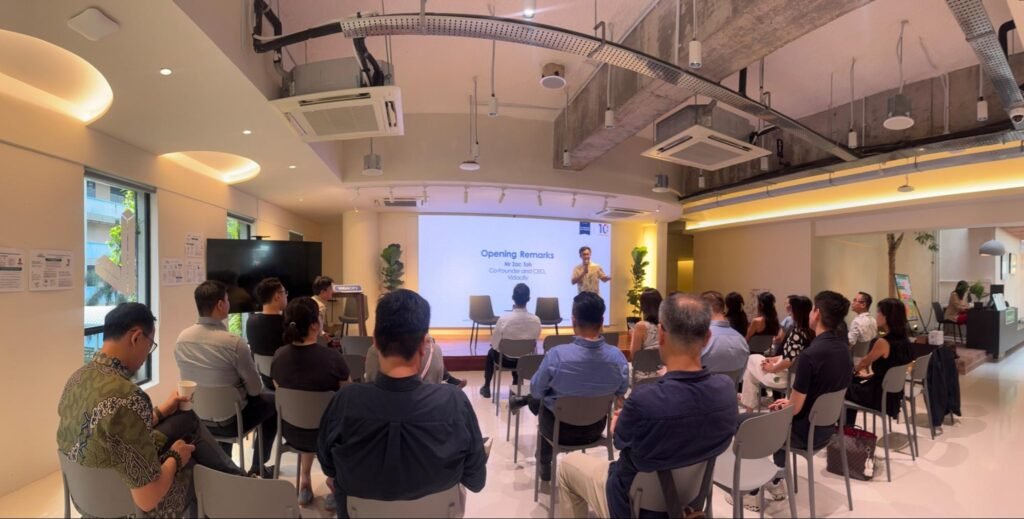 Image courtesy of: Vidacity
“I felt like, wow, the world [has] really quite a lot of issues,” he recalled. “Then what can we do to help some of these individuals or startups to really move to the next leg of their growth?”
This question would go on to shape much of his work supporting businesses across sustainability and innovation.
The challenge of turning a good idea into a viable business
One of the biggest challenges Zac observed among startups is the difficult transition from proof of concept to proof of value.
“A lot of individuals and startups or companies actually die during the proof of concept to proof of value stage,” he said.
A startup might have developed a working technology, but that alone is often not enough to secure investment or customers.
“When you only have a proof of concept, you have a bit of tech. No one wants to fund you.”
At the same time, potential customers may hesitate to adopt an unproven solution. This creates the “valley of death” that many startups struggle to cross.
For Zac, one of the most important ways to overcome this is through market validation.
Why market validation matters
 Image courtesy of: GWS Living Art
Zac has experienced this himself.
When his team first developed its green wall solutions, securing trust from the market was challenging. A turning point came when they secured a major project at Changi Airport Terminal 4.
“It was the first project that we landed,” he said. “We didn’t make money, because we didn’t really know how to optimise installation yet.”
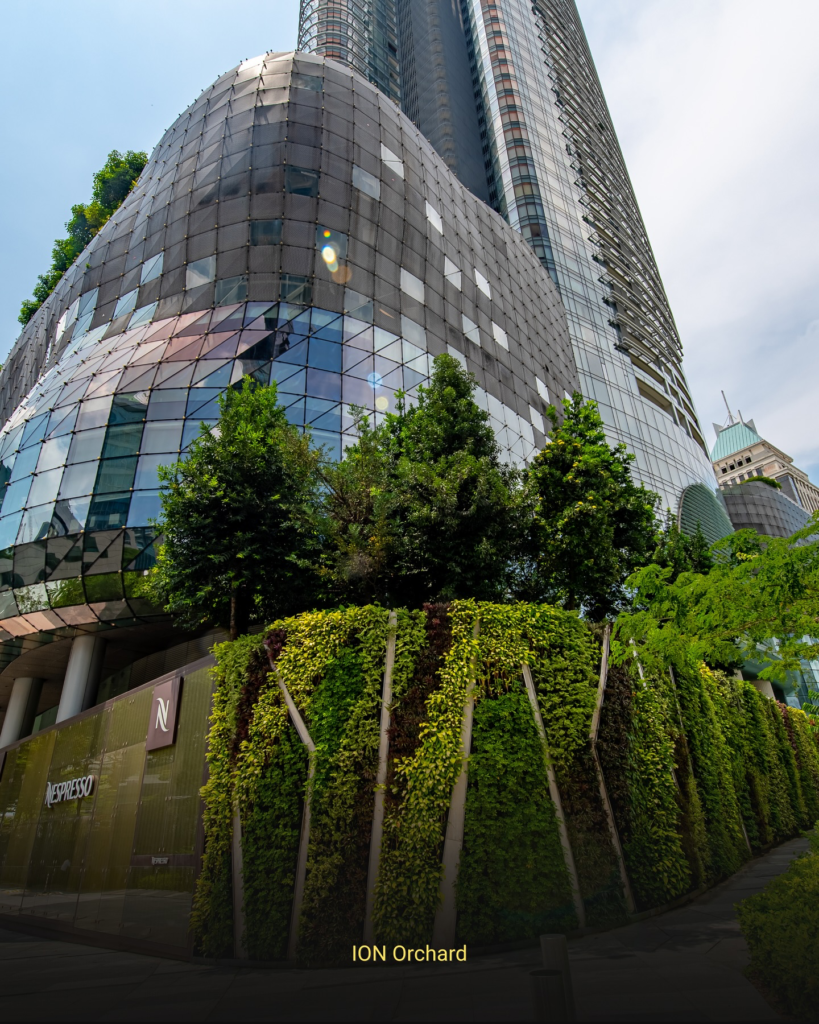 Image courtesy of: GWS Living Art
But the project provided something equally important: proof that the solution could work in a real-world environment.
“That market validation really helped us to push us into the market.”
The lesson became even clearer when the team developed a new green roof system. Instead of relying on traditional methods, they developed a mat-based alternative and demonstrated it by installing the system on moving buses around Singapore for two years.
“That market validation was what pushed the solution to market,” Zac said.
For entrepreneurs, the lesson is simple: a solution needs to work beyond the pitch deck. A first customer, pilot or real-world deployment can provide the credibility needed to unlock further investment, partnerships and opportunities.
Being a company of good when times are tough
For Zac, the importance of proving value extends beyond startups. It also applies to the broader question of what it means to be a company of good.
Businesses today face increasing disruption, from AI and technological change to new competitors and tighter margins. While it can be easier to do good when business is going well, Zac believes the real test comes during difficult periods.
“When times are good, right, it’s very easy. Everyone can be good.”
“But when times are bad, and business is bad, and there’s so much disruption coming in, left, right, centre, there’s a new startup coming to take your market share. Then that’s where the biggest question mark comes.”
 Image courtesy of: Pexels
For him, being a “company of good” cannot simply be about what a business does when conditions are favourable. It needs to be embedded in how a company operates when circumstances become more challenging.
Building businesses people want to work with
 Image courtesy of: Earthopia Fest
Being a company of good also starts with something simple: being a good person.
“Most fundamentally, most important, you must be a nice person.”
His reasoning is practical:
“No one wants to help [a difficult person]. So you have to be fundamentally a good person to start off with.”
The relationships founders build can be just as important as the solutions they create. Customers, investors, partners and fellow entrepreneurs can all help a business move forward.
“Once you have market validation to that solution you’re trying to solve, then the rest is like a spin wheel that will come along.”
For Zac, entrepreneurship is therefore not just about what you build, but also about the trust you build around it.
Keep asking: how can we improve?
Perhaps the strongest lesson from Zac’s entrepreneurial journey is that being a company of good is not a destination.
He reflected on a visit to RGE, where what struck him was the organisation’s continued focus on improvement despite its scale.
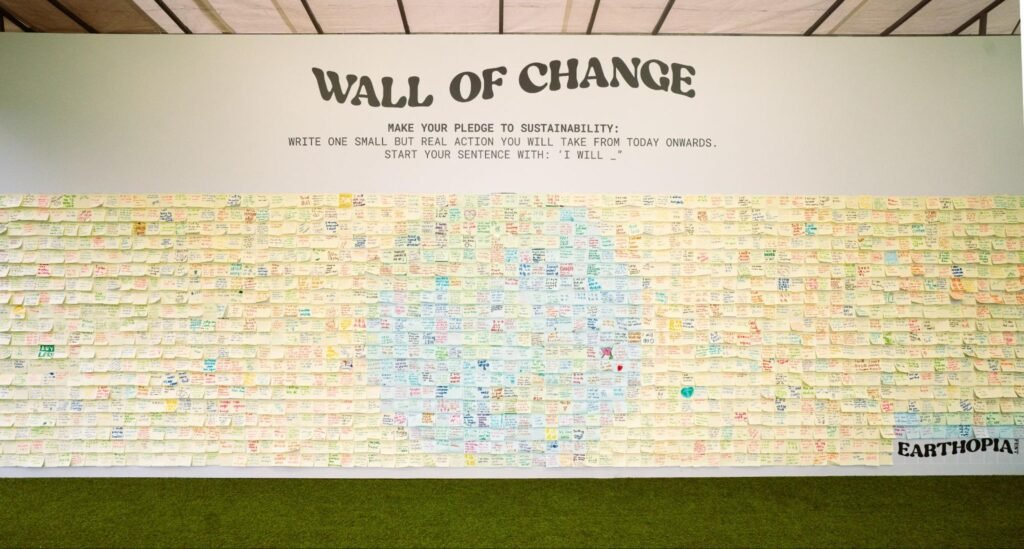 The Wall of Change is an initiative by Earthopia Fest organised by City Sprouts to encourage the public to write down their sustainable goals.
Image courtesy of: Earthopia Fest
“Even at their size, right, they are constantly thinking how to do it better, how to do it good.”
This mindset is fundamental to building a business that can remain relevant over the long term.
“At business, any size, it’s really that continuous: how can we improve? How can we improve? That is very important.”
It is a philosophy that connects his experiences across entrepreneurship, sustainability and innovation.
Markets will change. Technology will evolve. New challenges will emerge.
The businesses that endure will need to keep adapting – not only to remain commercially viable, but to remain relevant to the people and communities they serve.
And perhaps that is what it ultimately means to be a Company of Good: not simply to do good once, but to keep asking how you can do better.
Read more about our community: